Budget for recycling costs — commercial recycling and disposal can carry charges.
Ask about minimum charges — some commercial collections have minimum fees.
Check waste categories — different materials can have different recycling costs.
Avoid contamination — mixed or contaminated loads may cost more to process.
Separate recyclable materials — this can help reduce unnecessary disposal costs.
Separate high-value materials — metals, IT equipment and reusable items may have recovery value.
Weigh your waste — commercial charges may depend on the type and weight of material.
Ask for clear pricing — understand collection, transport, recycling and disposal charges.
Consider collection frequency — regular collections can help control waste build-up.
Plan office clearances — advance planning can reduce unnecessary transport and disposal costs.
Ask about reuse — furniture and equipment in good condition may be reused rather than discarded.
Recycle responsibly — choose legitimate recycling and waste-recovery services.
Ask where your waste goes — responsible recycling should prioritise recovery and reuse where possible.
Protect confidential data — securely destroy hard drives and sensitive documents.
Request a waste transfer note — keep appropriate documentation for commercial waste collections.
Keep recycling records — retain weights, collection details and disposal documentation.
Check what is included in the quote — labour, loading, transport, weighing, recycling and disposal can all affect the final cost.
Choose ethical recycling — make sure waste is handled through legitimate and responsible recycling channels.

Clear 2 Go Removals
Clear it, Move it, Recycle it
Ask for a Free Video Quote
0800-246-5778
Making Your Move Quick & Easy
Eco Responsible Removal Solutions Clear Today Recycling 4 Tomorrow Clear It. Move It. Recycle It.
HOW WE THINK
ClearToday
Recycling 4 Tomorrow
Clear 2 Go Removals provides reliable, professional and environmentally responsible removal, clearance and collection services for homes, businesses, landlords and commercial customers across London and surrounding areas
Our Services

Moving Home
Reliable removal services for moving between homes, flats, storage facilities and other locations.

White Goods
Removal of office furniture, desks, chairs, cabinets, equipment and unwanted commercial items from offices and business premises.

Recycling
Wherever practical, suitable items and materials are directed towards reuse, recycling and recovery rather than simply being thrown away.
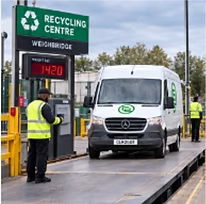
Weight Based
For suitable clearance jobs, we offer weight-based pricing, providing a straightforward way to calculate the cost of removing qualifying materials and unwanted items.

Large Item Collection
We provide reliable collection, transportation, and doorstep delivery of furniture, electrical appliances, DIY supplies, and home improvement products from retailers such as IKEA, Argos, Wickes, and B&Q.

Office clearance
Our office clearance service efficiently removes unwanted furniture, equipment, and waste, leaving your workspace clean, tidy, clutter-free, and ready for use.

Courier Subcontractor
Been let down or need additional help, We offer fast, efficient and reliable nationwide courier delivery 24/7 for your bulk goods.

Bulk Courier & Multi-Item Delivery Services
We provide Reliable, Affordable & Flexible Bulk Courier Seevices for Businesses, Retailers, Tradespeople and Individual Customers
Movers you Can Trust
Long Distance Moving
Full Value Insurance
95% Referral Rate
Our Customer's
Business
“Excellent service from start to finish. The team cleared our office quickly, professionally and with minimal disruption.”
Norman Coxman
Moving
“The team were punctual, careful and professional. They handled our furniture with real care and made the move stress-free.”
The Appletons
Recycling
“They made the whole recycling process simple. Everything was collected, sorted and handled responsibly, with clear communication throughout.”
Roger Bernstien
About Us
Clear 2 Go Removals provides reliable, professional and environmentally responsible removal, clearance and collection services for homes, businesses, landlords and commercial customers across London and surrounding areas.
From moving home or relocating a business to clearing an entire property, removing unwanted furniture or collecting bulky items, our experienced two-man team provides a complete solution from collection and loading through to transportation, reuse, recycling or responsible disposal.
Clear 2 Go Removals provide house clearances, office and commercial clearances, home removals, man and van services, furniture removal, white goods collection, bulky-item collection, weight-based clearances and recycling and responsible disposal services.
Whether you have a single unwanted item or need a complete property cleared, we can handle the job. We take care of the heavy lifting and loading, making the process simple and convenient for our customers.
Clear 2 Go Removals offers a reliable Man and Van Collection & Delivery Service for Customers who have purchased a bed from IKEA, or a large-screen TV from Argos, or decorating materials from Wickes, or a bathroom suite from B&Q.
We provide an affordable and convenient Man and Van Service to collect your purchases from stores, warehouses or collection points and deliver them safely to your home, flat, office or building site.
Furniture Delivery: Beds, mattresses, wardrobes, sofas, tables, chairs and flat-pack furniture from IKEA and other furniture retailers.
· TVs & Electrical Items: Large-screen televisions and other boxed electrical appliances from Argos and similar retailers.
· DIY & Decorating Materials: Paint, wallpaper, flooring, tools, timber and other building supplies from Wickes and DIY Stores.
· Bathroom & Kitchen Supplies: Baths, shower enclosures, bathroom cabinets, sinks, toilets, taps and boxed bathroom suites from B&Q and other suppliers.
· Store & Warehouse Collections: Collection of customer purchases from retail stores, warehouses, trade counters and click-and-collect points.
· Home & Business Deliveries: Delivery to houses, flats, offices, rental properties and construction sites.
· Loading & Unloading Assistance: Help with loading, unloading and moving heavy or bulky items, subject to prior agreement.
· Same-Day & Scheduled Deliveries: Flexible delivery appointments, subject to availability.
Clear 2 Go Removals provide reliable, affordable and flexible bulk courier services for businesses, retailers, tradespeople and individual customers. From single bulky purchases to full van loads, Clear 2 Go Removals help get your goods where they need to be.
Our service specialises in the collection and transportation of large, heavy, bulky and multiple-item orders from retail stores, warehouses, distribution centres, wholesalers and trade suppliers directly to homes, business premises, offices and construction sites.
Whether our clients need a single large order collected or multiple items delivered in one journey, Clear 2 Go Removals offers convenient transport solutions tailored to our clients requirements.
Clear 2 Go Removals aims to provide a dependable, cost-effective service with careful handling, timely collections and deliveries and clear pricing, based on distance, load size, item type and delivery requirements.
Insurance – Commercial Van Insurance, Public Liability Insurance & Goods In Transit Insurance
Licences – Licenced Waste Carrier with the Environment Agency (EA) & Scrap Metal Dealer Licence with the Local Council
4 Step Moving Process
STEP 1
Planning
STEP 2
Packing
STEP 3
Moving
STEP 4
Unpacking
Moving Tips
Tips for Customers
Declutter first — separate keep, donate and remove items.
Keep valuables with you — laptops, phones, jewellery, cash and important documents.
Check drawers and cupboards before the clearance team arrives.
Separate sentimental items you don’t want removed.
Never leave valuables mixed with items for disposal.
Prepare access — keep driveways, doors and pathways clear.
Ask about recycling — choose responsible disposal where possible.
Confirm the price — check exactly what’s included.
Do a final check — make sure nothing important is left behind
Room by Room Tips
Living Room
Remove personal valuables and sentimental items.
Check drawers, cabinets and behind furniture.
Clearly mark anything staying.
Bedrooms
Check wardrobes, bedside tables and drawers.
Remove jewellery, cash, documents and electronics.
Check under beds and inside storage boxes.
Kitchen
Check cupboards, drawers and appliances.
Remove food and personal belongings.
Identify appliances that are staying or being removed.
Bathroom
Check cabinets and drawers for medicines and personal items.
Remove toiletries you want to keep.
Empty cupboards before clearance.
Loft / Attic
Clearly identify items to keep.
Check boxes before removal.
Ensure safe and clear access.
Garage / Shed
Separate tools and equipment you want to keep.
Identify hazardous materials before the team arrives.
Clear access around larger items.
Garden
Identify garden furniture and equipment to remove.
Separate plants or items you want to keep.
Tips to ask Us
Before Booking
Are you fully insured?
Is the quote fixed, or are there additional charges?
What exactly is included in the price?
Do you handle house clearances, lofts, garages and gardens?
Do you recycle or responsibly dispose of unwanted items?
On Moving Day
How many movers will attend?
Will you protect floors, walls and furniture?
Do you provide blankets and protective wrapping?
How will fragile or valuable furniture be handled?
Can you dismantle and reassemble furniture if needed?
For Clearances
What items can you remove?
Do you take appliances and white goods?
How do you handle items for recycling or reuse?
Will you leave the property clean and tidy?
Can I request proof of responsible disposal or recycling?
Before They Leave
Can we do a final walkthrough together?
Have all agreed items been removed?
Have you checked the loft, garage, garden and other areas included in the job?
Tips for Businesses
Clear out old office furniture — desks, chairs, cabinets and shelving.
Recycle old IT equipment — computers, laptops, monitors and printers.
Protect your data — ask for secure hard-drive destruction, including physical crushing.
Remove confidential documents before clearance.
Recycle cables and electrical equipment rather than sending them to general waste.
Dispose of old appliances responsibly — fridges, microwaves and other equipment.
Ask for recycling and destruction documentation for your records.
Separate equipment where possible to make recycling easier.
Don’t leave sensitive information on unwanted devices.
Clear storage rooms and unused office areas to create more working space.
Ask about responsible disposal of unwanted business waste.
Use a professional clearance service for office moves, refurbishments and closures.
Tips for Recycling
Why pay for a Quote?
Ask for a Free Video Quote
Using your smartphone give us a video tour of: Removals, Delivery, Collection or Recycling.
Clear it, Move it, Recycle it
CONTACT
Phone: 0800-246-5778
https://www.clear2goremovals.com
Email: info@clear2goremovals.com
Address: 180 Willoughby Lane, London N17 0RY
OFFICE HOURS
Mon – Fri: 9am – 5pm
DELIVERY HOURS
We operate 24 hours.